Introduction
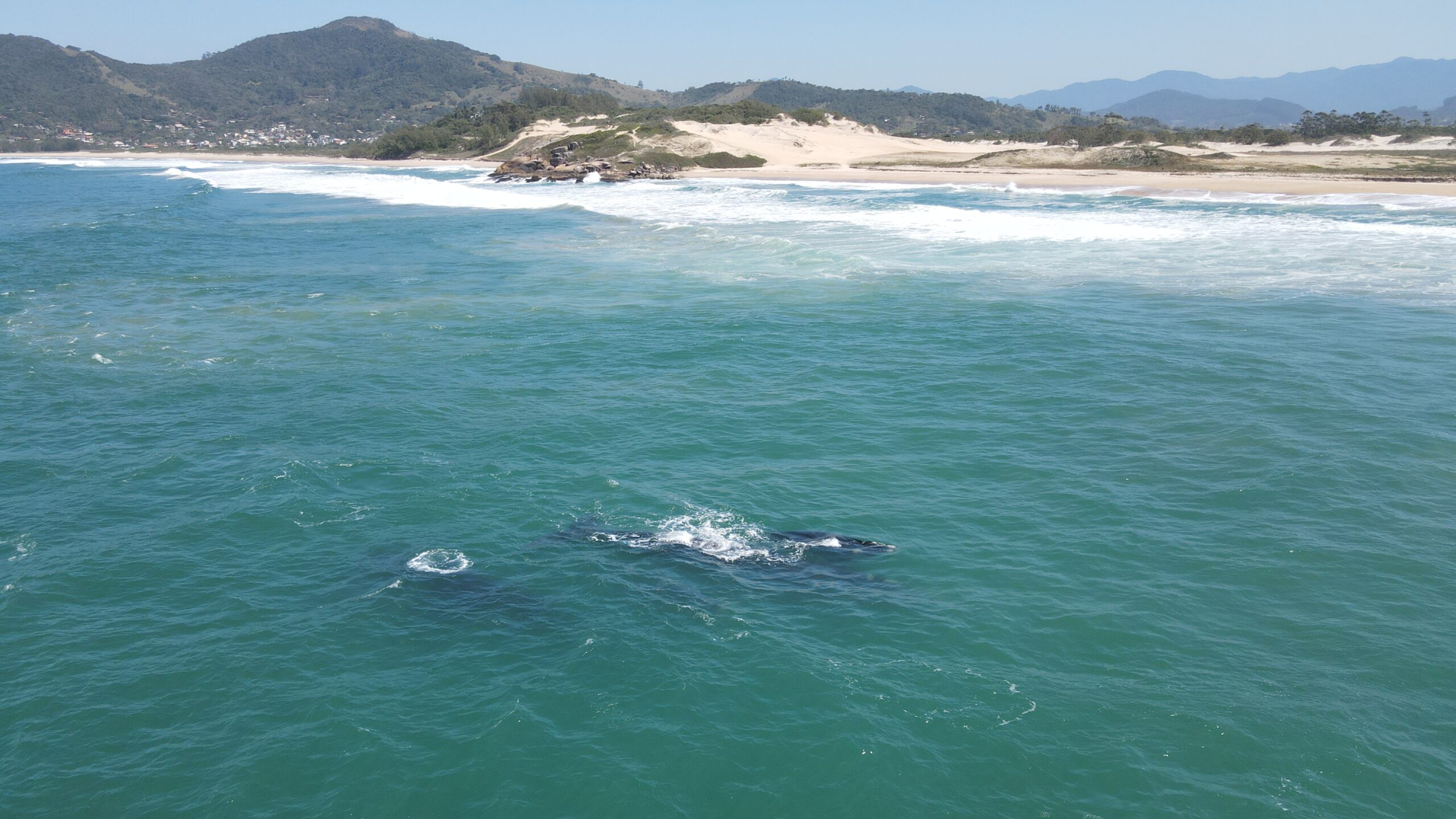
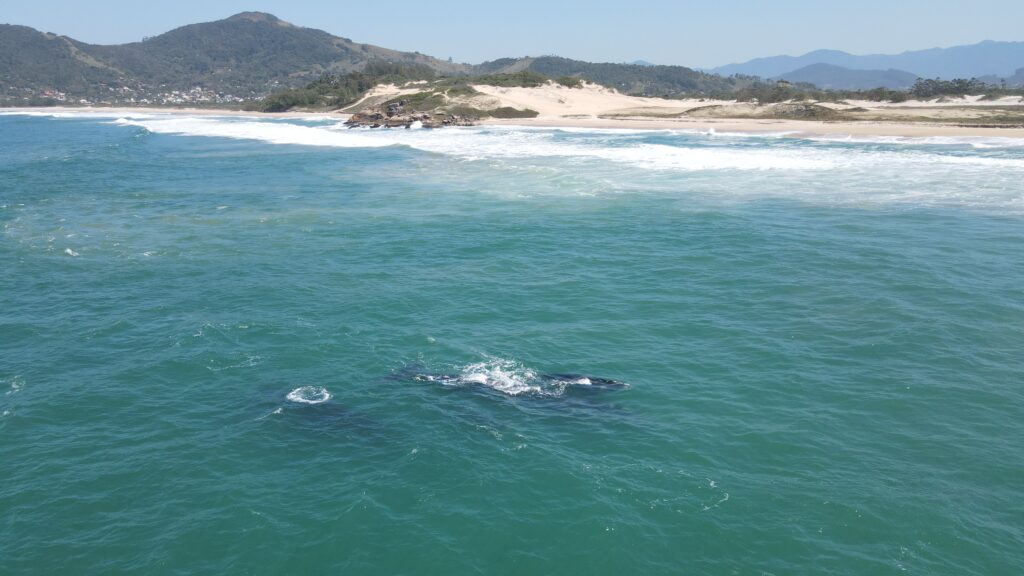
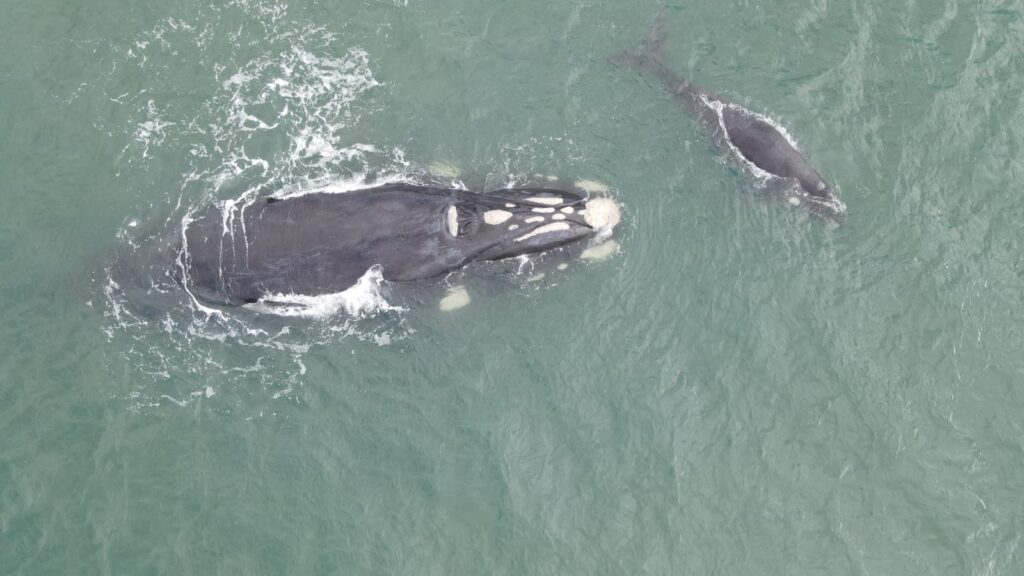
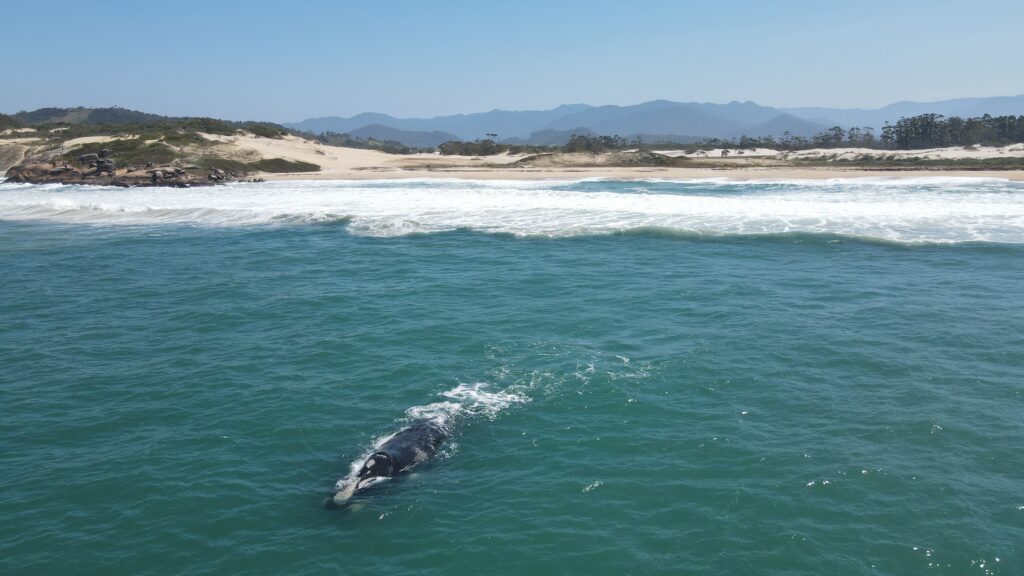
Between July and November, the southern coast of Santa Catarina transforms into the setting for one of nature's most exciting phenomena: the arrival of southern right whales. These giants—which can reach up to 16 meters in length—migrate from Antarctica in search of warmer, calmer waters to mate, give birth, and nurse their calves. And Paulo Lopes is among the privileged destinations to experience this moment.
A Guarda do Embaú Beach, located between the municipalities of Paulo Lopes and Palhoça, This is one of the best spots for observing whales from land. It is from this region, especially the part belonging to Paulo Lopes, that many visitors have the chance to spot mothers and calves swimming close to the surf, leaping, or displaying their impressive tails over the blue waters of the Santa Catarina coast.
A show that spans municipalities.
The southern right whale season attracts visitors to various destinations in the region. The municipalities of Garopaba, Imbituba and Laguna They form the traditional Southern Right Whale Route, considered the area with the highest concentration of whale sightings in Brazil. Coastal trails, natural viewpoints, and elevated rocky shores make it easy to spot these giants.
However, the spectacle is not limited to the Route, which Paulo Lopes is expected to officially join in 2026. In recent years, sightings have also been frequent on other beaches along the Santa Catarina coast, such as:
- Paulo Lopes — especially in Guarda do Embaú (south side, near Spark Stone)
- hut — in Guarda do Embaú and the Pinheira region
- Florianopolis — on beaches such as Armação, Pântano do Sul, Moçambique and Lagoinha do Leste
This means that those who visit the region between winter and spring greatly increase their chances of experiencing the thrill of seeing a southern right whale up close.
Guarda do Embaú: a natural refuge between Paulo Lopes and Palhoça
Guarda do Embaú is one of the most impressive beaches in Santa Catarina, recognized for its combination of... preserved nature, crystal-clear waters, and a strong cultural identity..With main access via Palhoça and located in the municipality of Paulo Lopes, the beach impresses with the landscape formed by the meeting of Rio da Madre with the sea, creating an estuary of rare beauty.
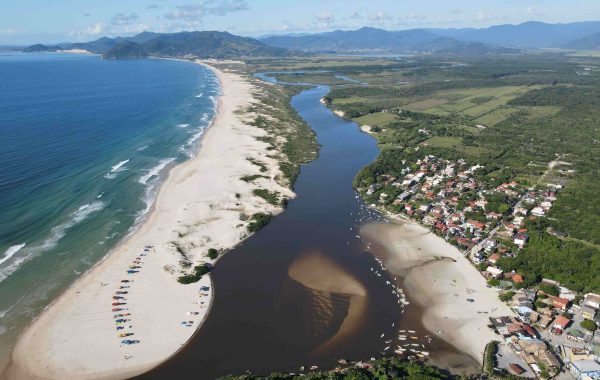
On the left side of the beach, the lively atmosphere, especially in the summer, is one of the area's defining characteristics.
The right corner, next to Spark Stone,It's a vast, quiet territory surrounded by vegetation, offering privileged vantage points for whale watching from the dunes and rocky shores. The tranquil vibe and unspoiled scenery make the experience even more special.
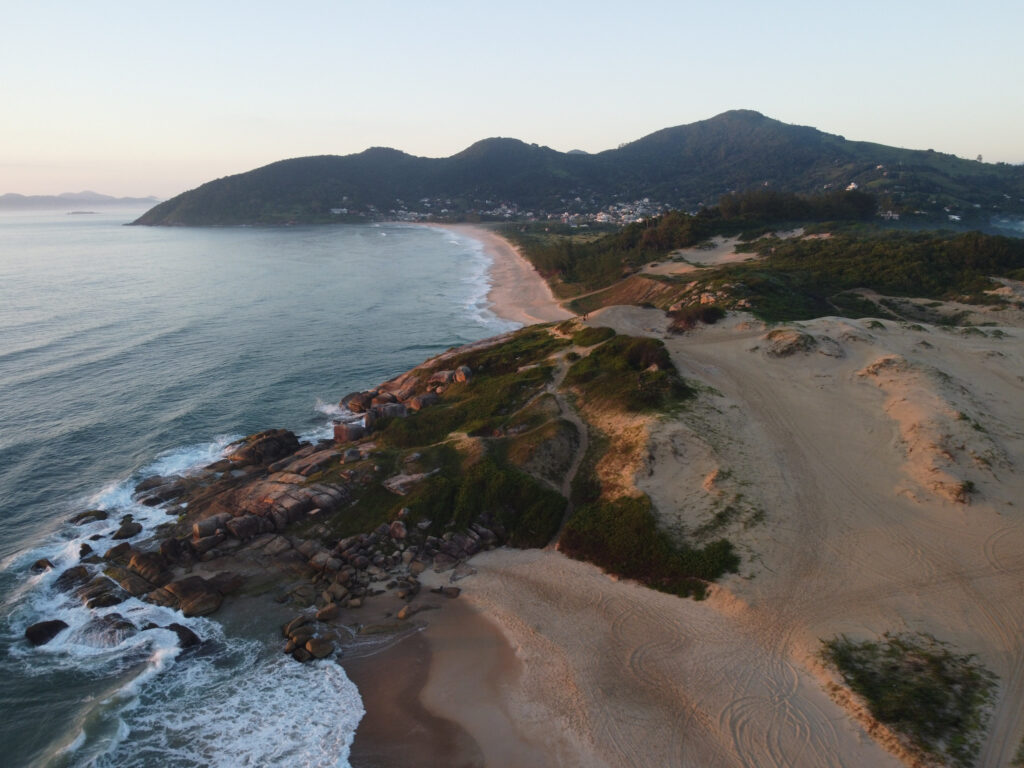
The region also offers:
- ecological trails with panoramic views
- access to neighboring beaches, such as Gamboa and Siriú (Garopaba)
- fishing village with preserved local culture
- Activities such as surfing, stand-up paddleboarding, and sunset walks.
All of this creates a perfect environment for those seeking nature, culture, and the excitement of whale watching season, all in one place.
How to watch whales in the Paulo Lopes region
The observation of southern right whales is done exclusively by land to protect the animals and ensure the safety of visitors. In Paulo Lopes, the most suitable point is at Spark Stone (right side of the beach), from where there is a wide view of the ocean.
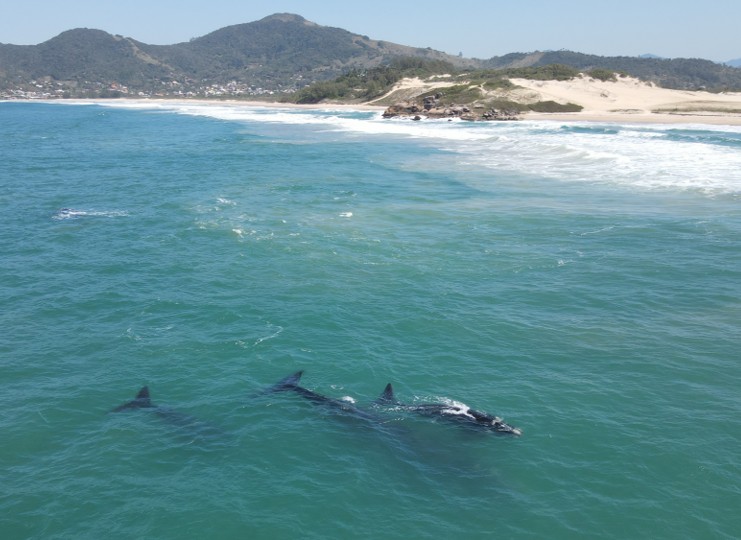
The observation of southern right whales is done exclusively by land to protect the animals and ensure the safety of visitors. In Paulo Lopes, the most suitable point is at Spark Stone (right side of the beach), from where there is a wide view of the ocean.
To increase your chances of spotting the giants:
- Go in the morning, when the sea is calmer.
- Look for elevated areas with good visibility.
- bring binoculars
- Keep quiet and respect the natural space.
- Plan your day to include time for walks and contemplation.
For those who wish to increase their chances of sightings, an indispensable tool is the Updated sighting map of ProFRANCA, CLICK HERE!
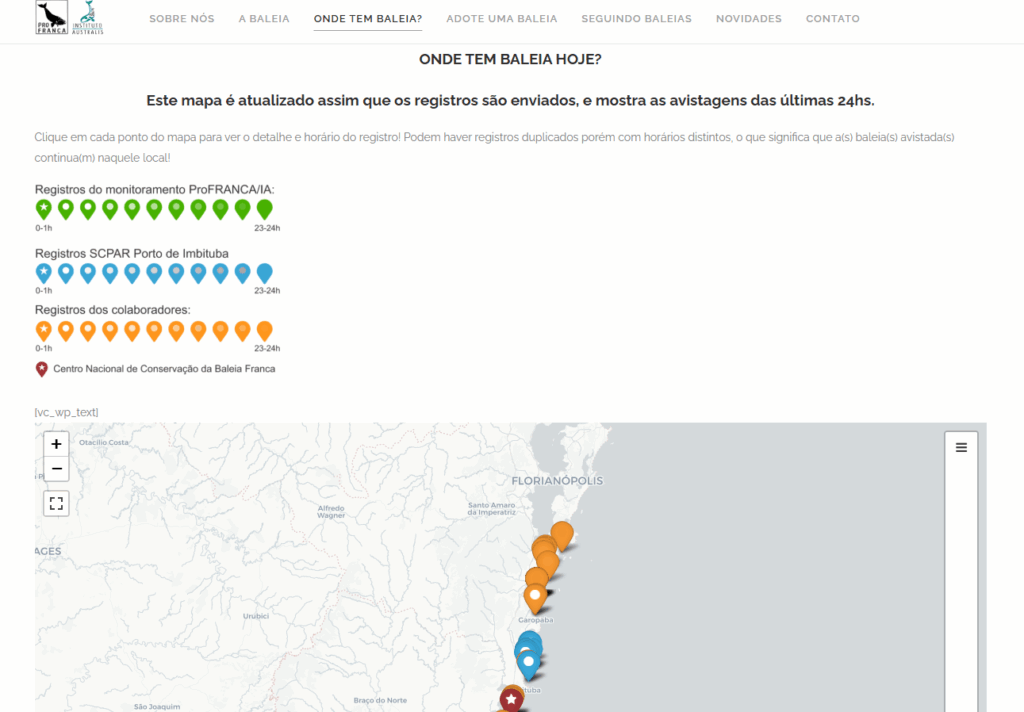
The map functions as a simplified app and shows, in real time, the locations where whales have been sighted in recent days. This allows visitors to plan their trip to the viewpoint, dune, or rocky shore based on up-to-date information, optimizing their time and increasing their chances of spotting the animals.
Each sighting is unique — it could be just the back gently emerging on the surface or even a spectacular jump that draws applause from visitors.
Responsible tourism: a commitment to nature
Whale watching is an exciting experience, but it also requires respect. To ensure the protection of the animals and the continuation of this spectacle for future generations, it is important to:
- maintain a safe distance
- Respect trails, protected areas, and instructions from guides and drivers.
Whale season is an opportunity for a deep connection with marine life and the balance of nature that makes the coast of Santa Catarina so special.
Why is Paulo Lopes a great spot for whale watching?
- It lies exactly on the axis of the southern right whale's movement areas.
- It has rocky shores and dunes with excellent visibility.
- It has less crowded areas, ideal for quiet observation.
- It is close to the main points of the Southern Right Whale Route.
- It offers complementary experiences in hiking, nature, and rural tourism.
- It's a quieter alternative for those who want to escape overcrowded beaches.
Thus, the municipality stands out as a complementary and valuable destination during the giants' season.
Conclusion
Experiencing whale season in Paulo Lopes is witnessing nature in its most magnificent form. From Guarda do Embaú to the neighboring beaches that make up this landscape, each outing to observe the sea is a new chance to be amazed. Between local culture, coastal trails, preserved nature, and the majestic presence of the southern right whale, the coastline between Paulo Lopes, Palhoça, and the municipalities along the route becomes an invitation to slow down, contemplate, and connect with the ocean.